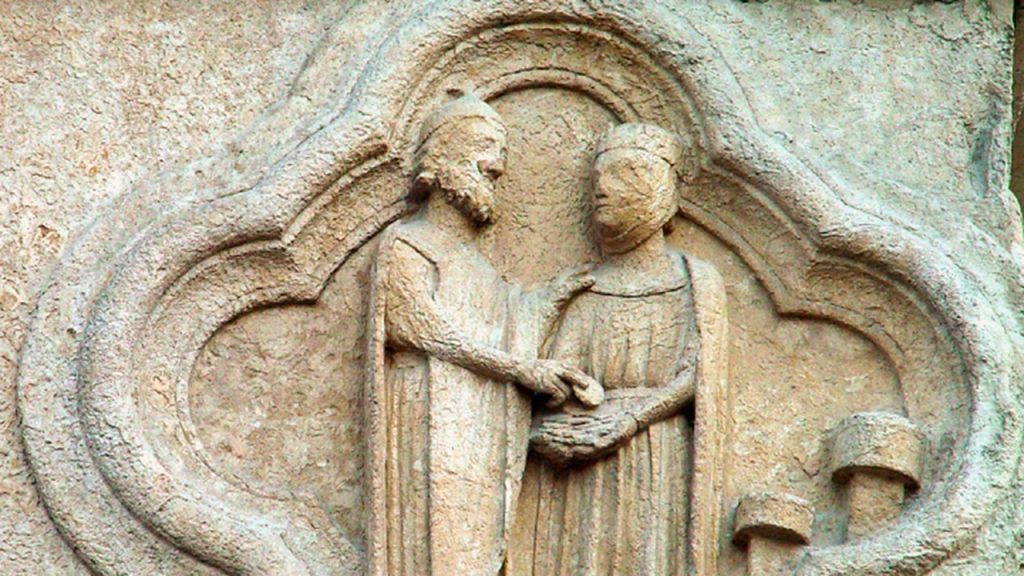
Hosea’s experience with His bride
Hosea lived twenty years before the Northern kingdom of Israel fell to the Assyrians. So as a preacher he had a poignant message to give Israel. But God wanted Hosea to feel what He feels towards Israel.
Therefore, God had some good and bad news for Hosea. The good news was that God was letting Hosea marry the most beautiful woman in all Israel. The name Gomer in Hebrew means “perfect.” The bad news was Gomer was a prostitute. After all, when ever did God tell a prophet or preacher to marry an unfaithful woman? The metaphor that God wanted Hosea to experience is what God Himself was experiencing: even though God was married to a beautiful bride (the Church/Jewish Nation), she was unfaithful.
When Hosea married Gomer they decided to have children. You would think that you would want God to name your children, wouldn’t you? But for Hosea it was a different story. Their first son was named Jezreel, meaning “castaway.” The second was a daughter by the name of Lo-Ruhamah, meaning “not loved,” and the last son Lo-Ammi, meaning “not my people.” God was using the names of Hosea’s children to describe His relationship with His own children, Israel.
After the children were born, rumors were going around that Gomer went back to her trade. Hosea even gets the children to pray for their mother (Hosea 2:2). Gomer probably left a note and said she’s leaving Hosea and the children, stating she found another man. Because of this I’m sure Hosea’s message to Israel changed from one of a thunderous warning of an Assyrian invasion to a message of pleading with tears.
Not only did Hosea feel the tears of his estranged wife, as God did toward Israel, but Hosea’s message toward Israel now displayed God’s love for them. However, Israel’s bitter lesson would be learned from rejecting Hosea’s plea: destruction would come before restoration.
And so it was with Gomer as well, being stripped naked and on an auction block (Hos. 3:2), feeling wretched, poor and naked (Rev. 3:17, 18). But Hosea’s love motivation for Gomer is what God desires for Israel and Gomer as well (Hos. 3:1), and that ends in redemption (Hos. 2:19; 3:1).
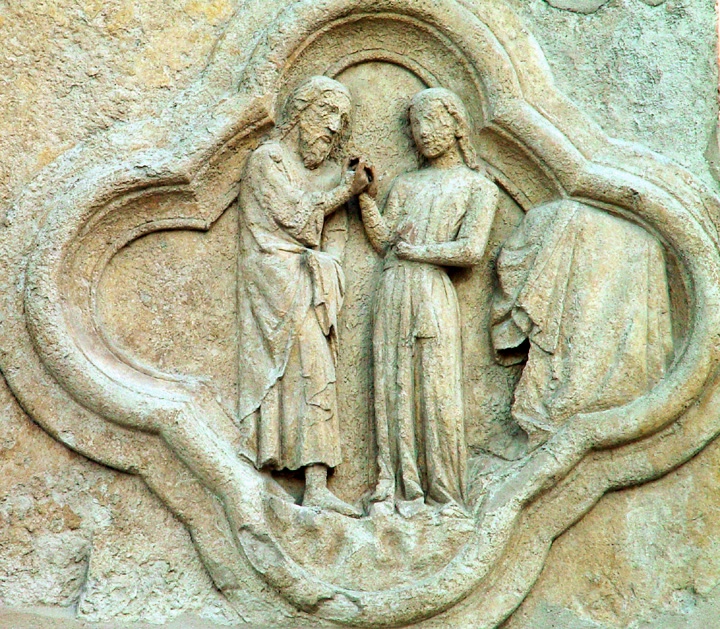
Thirty pieces of silver
As God is betrothed forever to Israel (2:19) and will redeem her (2:23), so Hosea outbids everyone else and purchases Gomer back for 15 shekels of silver and a homer and a half of barley, which equated to another 15 shekels, thus equaling the amount of 30 shekels of silver. That, according to Lev. 27:4, was the amount paid for a female (bride) vowed to God. As Hosea redeemed Gomer for 30 shekels of silver, so did Christ in God redeem us, the seed of Israel!
It was a humiliating act for Hosea to redeem Gomer, with the fact that everyone knew that Gomer was a prostitute. But Hosea loved Gomer, and so does God Israel. Phil. 2:8 says that “being found in appearance as a man, he humiliated (humbled) himself and became obedient to death, even the death of a cross,” for His bride, I might add.
Did Gomer deserve redemption? Not really. Did we deserve it? Not really. But then who can explain the motives of love? Love doesn’t act according to reason. “God so loved the world that he gave…” (Jn. 3:16).
Questions for us
The questions we need to ask ourselves are: as Hosea married an unfaithful wife, how have we prostituted ourselves from God toward the world? As Gomer fell to nakedness, poor and destitute, have we seen our own condition, and have we heeded the message to the Laodicean church in Rev. 3:17–19? As Gomer felt that her redemption price paid by Hosea was proof that he loved her, have we appreciated the worth of Christ’s sacrifice, of Him being betrayed for 30 pieces of silver to redeem us, His bride? Let it not be said that God’s love was lost and thrown away to an ungrateful people (His bride).
When we received Christ in our hearts we betrothed ourselves to Him and Him to us forever (Hos. 2:19). The word betroth is erusin, meaning “bind.” God said He is bound to us forever; the question is, do we daily desire to be bound to Him? Only by entering into the new covenant vow daily will the bride realize, as did Gomer, how far she has fallen, and partake in the future wedding feast.
I will make you my wife because of my faithfulness, and you will know the Lord. … I will heal their backsliding, I will love them freely.
Hosea 2:20; 14:4
And remember, as with Hosea’s illustration, God desires a deep covenantal relationship with us, not a legal contract.
God Bless,
Kevin Michalek
Images: Hosea and Gomer, 13th-century reliefs on the west front of Amiens Cathedral, France. Photos by Anne C. Richardson and Jim Womack, public domain, via Wikimedia Commons (Vanderbilt Art in the Christian Tradition).