The Almond Lampstand (Menorah)
By Kevin Michalek · The Feasts and the Sanctuary
The Lamp stand (menorah / Luchnia)
The word for candlestick in Hebrew is “menorah” it is used in application of God’s illuminating influence through His church Rev. 2 and 3. The shaft of the menorah was called a “reed” or “branch” in Hebrew (qaneh) with “flowers” (perha). It may well have been associated with the tree of life since in Solomon’s temple there were many reminders of the Garden of Eden...
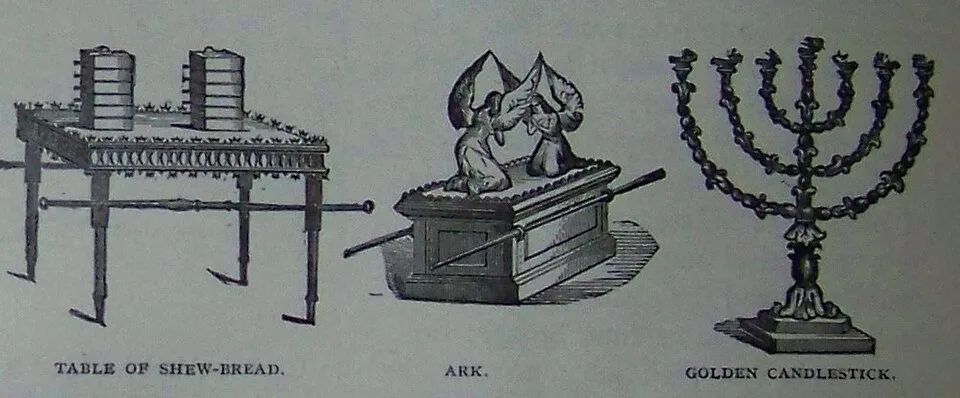
There are 3 stages (flower, bud, fruit) of the almonds which total 70 The total of 70 is based on the outer branches having 13 each, the next inner branches having 10 each the next inner branches having 5 each and the middle having 7 and each bowl (7 bowls) = 70. See the illustration above. The center stem was taller and is more accurately portrayed that way. See Exodus 25:31-37 and Ex. 37:14-20; Lev. 24:4 see also Zech. 4:2-6
In Luke 10:1 -20. The description of the “seventy” is key for translating the lamp stand to the priesthood of all believers (Rev. 1:6, 5:10 and 1 Pet. 2:5,9 ). Luke 10:1 says the Lord "appointed" these seventy elders. Out of the eight words for "appointed" the word "anadeiknumi" is only found in Luke 10:1 and Acts 1:24. It means to "shew forth" "reveal," "disclose." In Luke 10:1 the word “appointed” is key. It is used only twice in the N.T. in Acts 1:24 it is used as “shew”. Therefore, the 70 were to “shewforth” their character of Christ. The word “almond” in Hebrew is “shaqad” and it means “alert” or “aware.” It portrays the seventy elders of Moses and the seventy disciples at Jesus' time perfectly. Therefore, the 70 were to be alert or aware that they were a “spectacle” (1 cor. 4:9) to the world. The number 70 is found in Exodus 1 when 70 of Jacob’s descendent came to Egypt. There were also 70 elders of Israel in Exodus 24:1. If you tie in Numbers 17 with Aaron’s rod that budded almonds then you have the full picture. A priesthood of 70. Since Aaron came from the tribe of Levi. The Levites represented the priesthood and were to be “alert” (shaqad = almond/ aware) and were appointed (anadeiknymi ) to “shew forth” God’s character has a kingdom of priests. Therefore, always needing to be "alert" "aware" (shaqad). V.19 states, "All power was given unto them." Therefore reaffirming that the priesthood exemplified in the seventy elders is related to the almond budding in Numbers 17 for Aaron and his sons from the tribe of Levi as well.
The candlestick was of solid gold (purity through divinity) and weighed one talent of “beaten” (miqsha) Ex. 25:31, describes as hammered or pounded gold.
The old priest’s dirty undergarments (sinner’s fallen nature; sin as act/nature) were used as wicks to burn the oil (Holy Spirit). This inturn illuminated (through the 70) the world, bringing God’s glory and conviction upon the earth. (Isa. 27:6, Rev. 18:1). Therefore, the 70 were to be “alert” or aware that they were a “spectacle” (1 cor. 4:9) to the world. The almond not only was a symbol of priesthood but is also represented in the three stages of the life, death and resurrection of Christ. John 1:9, Ps. 18:28
In addition, Jesus said of the 70 “Behold, I give unto you power (exousia) to tread on serpents and scorpions, and over all the power (dunamis) of the enemy: and nothing shall by any means hurt you" Note that the word power given to them is different than the word power of the enemy. The word "exousia" relates to Jesus giving "legal authority" over the devil's "dunamis" (power). The letters "ex" are the root word for exodus (ex= out, odus = road) or "road out.” Jesus is the hodos = road. Jn. 14:6 Jesus said I am the way = hodos = road. Therefore, Jesus gives this authority coming out (ex in exousia) from Him. The same "legal authority" (exousia) will be given to the true priesthood of all believers as well.
Characteristics of the word Lamp “Luchnia”
The church is represented as the lamp stand in Rev.1:20 Seven in number. The word lamp stand in Greek is “luchnia” or defined as “lamp stand” In the Old Testament it is used as a metaphors length of life (2 Sam. 21:17), source of divine help (Job 29:3), and the law (Ps. 119: 105). The lamp of the wicked will be put out (life) (Job 18:6). In the New Testament, a lamp must be put on s stand to give its light more fully, see Matt. 5:14-16. The woman in Luke 15:8 lights a lamp to find the lost coin. In John 5:35 Jesus honors John the Baptist by calling him a burning and shining lamp (light) he is not the light 1:18 but a witness to the light. Therefore in Rev. 11:4 the two witnesses are described as “luchnia” (Zech. 4:2, 11) while the seven churches as we had seen are seven golden “luchnia.” The lamb Himself is the lamp of the heavenly city in Rev. 21:23. Peter calls the prophetic word a lamp shining in a dark place until the day dawns (2 Pet. 1:19).